2026 Fall Leadership Conference
Materials & Handouts
Conference Central Schedule Speakers Materials & Handouts

2026 Fall Leadership Conference Schedule
*Need to be pre-registered for the New Directors Cohort
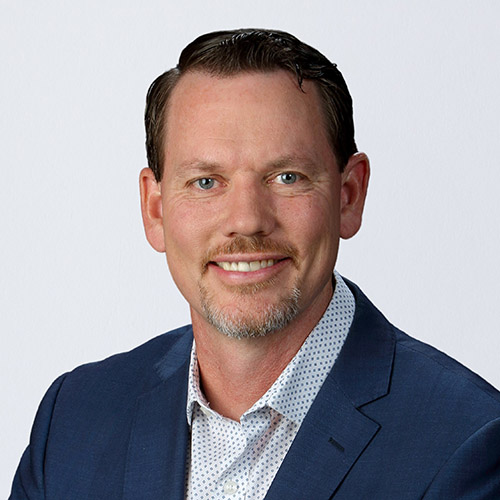
8:45 AM – 9:45 AM: Let Go (Without Letting It Go Wrong): Equipping Your Team to Think, Own, and Lead
Overworked? Stressed? Buried in decisions and problems that shouldn't always require you? These are signs you are carrying responsibilities your team should be owning, and that’s limiting your influence.
For special education leaders, letting go isn't easy. The stakes are high, the demands are constant, and sometimes stepping in and solving the problem yourself feels faster and safer. But when leaders become the answer to every question and the solution to every problem, people learn to wait instead of think, escalate instead of own, and depend instead of lead.
In Let Go (Without Letting It Go Wrong), Jason A Hunt shows leaders how to break that cycle without sacrificing accountability. Participants will learn practical strategies to stop rescuing, spark critical thinking, create greater ownership, and turn everyday challenges into opportunities to develop the people they lead. The result? Less firefighting. More ownership. And a team increasingly equipped to think, decide, and lead without everything having to come back to you.
9:45 AM – 10:00 AM: Q&A
A1. From Chaos to Calm: Building Systems Without Losing Humanity Vicki Courts, Program Coordinator – Administrative, Rum River Special Education Cooperative – Rum River East
Jeannine Miller, Director of Education Programs, Rum River Special Education Cooperative
Gaby Nelson, Mental Health Professional, Rum River Special Education Cooperative – Rum River East
Rural schools face unique challenges, but meaningful culture change is possible. This session explores how a high-needs special education program transformed through trauma-informed systems, co-regulation, staff investment, intentional leadership, and community partnerships. Participants will leave with practical strategies to strengthen relationships, create consistency, support staff, and build sustainable systems that move schools from chaos to calm.
A2. Navigating Compliance in Early Childhood and School-Age Evaluations — Handout Kate Dole, Early Childhood Special Education Specialist, Minnesota Department of Education
Rebecca Nesset, MDE Program Monitoring Supervisor, Minnesota Department of Education
This presentation will review compliance requirements for evaluations including timelines, consent requirements, eligibility determinations, and more. The presentation will cover due process and best practice guidance for birth-2, preschool, and school-age students highlighting the differences for each age range.
A3. The Parent Puzzle: Identifying the Decision-Maker and Navigating Difficult Dynamics Erin Hoffman, Executive Director, West Central Education District
Liz Vieira, Attorney, Squires, Waldspurger & Mace, PA
An attorney and special education director will explain both legal and practical considerations for identifying who is a “parent” under IDEA and working through disputes over decision-making. Attendees will receive strategies and resources for navigating challenging situations with parents.
A4. Moving Beyond the Math Wars: What Special Education Leaders Need to Know to Improve Mathematics Outcomes for All Students Nicole McKevett, Assistant Director of Product and Service Innovation, CAREI, UMN
Rachel Roesslein, MTSS Specialist, CAREI, UMN
How can leaders navigate conflicting messages about mathematics instruction and intervention? This session examines what research says about effective mathematics practices and explores leadership strategies for building coherent instructional, intervention, and MTSS systems that improve math outcomes for students with disabilities.
A5. Leading Through Uncertainty: Navigating Federal Change Without Losing Your Focus Cherie Johnson, Executive Director, Goodhue County Education District
Federal special education policy is evolving at an unprecedented pace. Court decisions, executive actions, funding proposals, shifts in federal agency responsibilities, and changes to guidance have created uncertainty for school leaders across Minnesota. This session will separate fact from speculation and provide a practical overview of what has changed, what has not changed, and what administrators should be watching in the months ahead. Participants will leave with a framework for responding to questions from school boards, superintendents, staff, and families while continuing to lead confidently through change.
B1. Supporting the Supporters: Leading MH-SPED Staff Under Pressure — Handout Kate Adams, Special Services Instructional Coach, Eden Prairie Schools
Cara McGlynn, Lead School Social Worker, Northeast Metro 916 ISD
Managing MH-SPED staff requires balancing clinical support, special education compliance, supervision, billing, documentation, and staff sustainability. This session will help leaders clarify roles, strengthen supervision structures, align mental health services with IEP needs, and support mental health staff working in complex school environments.
B2. Top Monitoring Citations and How to Avoid Them — Handout Rebecca Nesset, MDE Program Monitoring Supervisor, Minnesota Department of Education
Rachel Kuha, Special Education Program Monitor, Minnesota Department of Education
This presentation will review the top findings of noncompliance identified through Program Monitoring activities including Topical Record Review, Disproportionality Policies and Procedures Review, Indicator Data Collection record review, and Comprehensive or Standard Monitoring Review. The presentation will highlight common pitfalls, proactive strategies to prevent findings, and steps for correcting identified noncompliance.
B3. Outside Providers: Teletherapy, ABA, and What's FAPE Got to Do With It? Adam Frudden, Attorney, Ratwik, Roszak, & Maloney, P.A.
This presentation will cover the intersection between public schools and outside providers, including parent requests, services as part of the public school’s programming, and parent provided services.
B4. Special Education Complaints and Due Process Complaints: A Guide for School Administrators — Handout Christian Shafer, Attorney, Ratwik, Roszak, & Maloney, P.A.
This session will cover being prepared for special education complaints and due process complaints and responding to such complaints.
B5. Paraprofessional Support – Considerations in the Least Restrictive Environment Savannah Walsh, Executive Director, Runestone Area Education District
In this presentation, the use of paraprofessionals is explored, including considerations of all positive and negative impacts of support. An article published in Feb. 2026 by Lee Ann Jung, "It's Time to Rip Off the Velcro: Rethinking Paraprofessional Support," was the basis of the development of this presentation. This presentation is intended to train all stakeholders – paraprofessionals, administration, special education staff and general education staff – the importance of fading and prioritizing building independence as it relates to paraprofessional support.
C1. Using SpEd Forms to Relieve Your Pressure Points Diane McCarron, Director of Services, SpEd Forms
Kori Ryan, Director of Services, SpEd Forms
Struggling with tight deadlines and budget constraints? Join us to master the essential navigation, data, and reporting tools within SpEd Forms. Designed specifically for newer administrators, this session provides the expert tips you need to streamline operations, maximize Third Party Billing revenue, and ensure accurate child count reporting. Reduce your administrative pressure points today!
C2. 18-22 Transition Programming for Students with Low Incidence Disabilities Sarah Robinson, Secondary Transition Specialist, Minnesota Department of Education
Katie Roby, Low Incidence Disability Specialist, Minnesota Department of Education
This session will provide an overview of transition programming for students with low incidence disabilities ages 18–22 in Minnesota. Presenters from the Minnesota Department of Education will outline Minnesota’s low incidence disability categories, the statewide Regional Low Incidence model, and how transition services are embedded within regional staff development, assessment, and planning. The session will highlight key resources, partnerships, and practices that support meaningful post‑school outcomes for students with complex and low‑incidence needs and offer guidance for districts on accessing regional and statewide supports.
C3. Integrating Mental Health into Student Support Systems (Mental Health SpEd) AJ Boehmer, Assistant Director of Special Education/Principal, Intermediate School District #917
Jen Petersen, Mental Health Coordinator, Intermediate School District 917
This presentation explores how mental health services are integrated within schools, including an overview of school-based mental health models, the role of mental health in special education evaluations and IEP development, and billing requirements. Participants will also learn about qualified professionals and the delivery of psychoeducation and psychotherapy services in educational settings.
C4. Data-Rich, Decision-Ready: Using Behavioral Progress Monitoring Data to Drive Student Impact — Handout Michelle Bethke-Kaliher, Director of Student Support, Alexandria Public Schools
Stacy Morgan, Co-Founder, Emergent Tree Education
Many schools are data-rich—but decision-poor—when it comes to student behavior. Teams collect progress monitoring data, but struggle to translate it into timely, effective action. This session closes that gap—equipping teams to build decision-ready systems where behavior data is not just reviewed, but actively used to guide interventions, adjust supports, and measure impact over time.
C5. When a Role Outgrows Its Training: A Yearlong Development Model for Behavior Management Specialists Kate Hurd, Autism Coordinator, Paul Bunyan Education Cooperative
Jeffrey Lee, K12 Special Education Coordinator, Paul Bunyan Education Cooperative
Brainerd Public Schools created the Behavior Management Specialist role to support a few students with intensive needs. As the position expanded across schools, responsibilities broadened without corresponding training, role clarification, or shared expectations. This session examines how PBEC identified the resulting systems gap and launched a yearlong monthly training model, with a spring follow-up on outcomes and lessons learned.
C6. The Year in Review: The Key Special Education Cases Adam Frudden, Attorney, Ratwik, Roszak, & Maloney, P.A.
Christian Shafer, Attorney, Ratwik, Roszak, & Maloney, P.A.
This presentation will provide an overview of the key recent special education cases. Through an interactive review of the cases, this presentation will help attendees understand special education legal obligations and glean insights about best practices.
D1. Building an Acuity-Based Staffing Model for Equitable Special Education Services Sonni Buerskin, Director of Student Services, Osseo Area Schools
As student needs become increasingly complex, special education leaders need staffing systems that reflect more than child count. This session explores how Osseo Area Schools shifted from projected enrollment-driven staffing to an acuity-based model. Learn how a cross-departmental task force identified and weighted student need factors to support more equitable staffing decisions, with practical ideas to begin developing an acuity-informed process in your own district. This session is best for leaders in larger districts with multiple elementary, middle, and high schools.
D2. From Audit to Action: Turning IEP Compliance Gaps into Targeted Professional Development — Handout 1, Handout 2 Sean Klamm, CEO/Founder, Playground IEP
Ellyn Miller, Manager of Partnerships and Customer Success, Playground IEP
Are your IEPs compliant and how do you really know? This hands-on session walks directors through using an AI-assisted auditing tool to evaluate IEPs against state guidance or their own rubric, surface recurring compliance gaps, and build a targeted PD plan based on what their team actually needs. Leave with a draft action plan ready to adapt for your staff.
D3. The Superintendent-Special Education Director Partnership: Leading Well Together Under Pressure Rochelle Cox, Assistant Superintendent, Fridley Public Schools
Brenda Lewis, Superintendent, Fridley Public Schools
Special education leadership does not happen in isolation — it happens in partnership with the superintendent's office. When that partnership is strong, districts move faster on innovative programming, communicate more effectively with school boards, and are better equipped to navigate the difficult conversations that come with serving students with the most complex needs.
Participants will leave with concrete strategies they can put into practice immediately, whether they sit in the superintendent's chair, the special education director's chair, or somewhere in between.
D4. Ahead of the Curve: An MTSS Framework for School Avoidance Leadership Alexandra McCannel, Founder and Licensed Marriage and Family Therapist, Genoa Health and Educational Services
Chronic absenteeism affects 25% of Minnesota students, much of it anxiety driven school avoidance. Districts respond well to Tier 3 crises but often lack Tier 1 and Tier 2 prevention. This session offers special education leaders a systems view within MnMTSS, grounded in Balfanz and Kearney, so leaders can get ahead of the avoidance curve rather than chase it.
D5. Under Pressure, Over the Finish Line: Leading Equitable Graduation Pathways for Students with Disabilities Tanya Holub, Special Education Coordinator, SoWashCo Schools
Kristin Papin, Special Education Supervisor, SoWashCo Schools
Special Education administrators face immense pressure balancing special education mandates with student success. Leading well under pressure means transforming compliance into equitable opportunity. This session provides a blueprint to navigate diverse graduation pathways for students with disabilities, including IEP Driven Diploma considerations, with a focus on student outcomes.
D6. Leading with Purpose: Maintaining Safety and Special Education Services During Community Crisis Megan Endresen, Special Services Coordinator, Columbia Heights Public Schools
Sarah Godfrey, Director of Special Services, Columbia Heights Public Schools
When federal immigration enforcement activity affected the Columbia Heights community, district leaders responded with purpose and a commitment to safety. This session shares practical strategies for crisis leadership, cross-department collaboration, family communication, and student support, highlighting lessons learned while maintaining access to special education services during a time of uncertainty and increased fear among families.

Restorative Practices for Lasting Impact and More Inclusive Classrooms
Learn how restorative practices can create more inclusive, equitable, and culturally affirming classrooms. This work, grounded in co-design, shared ownership, and a deep respect for students’ cultures, identities, backgrounds, and lived experiences, can create a lasting impact.
Creating more restorative and equitable schools requires a commitment to four core principles:
- Courageous conversations: create restorative spaces to identify and disrupt inequities and assumptions while engaging honestly across differences.
- Unapologetic inclusion: elevate all voices, especially those of students whose perspectives and experiences have historically been overlooked.
- Power sharing: shift from doing for students to designing and creating with them, ensuring students have meaningful voice, agency, and influence in the decisions that shape their learning.
- Transformational leadership: tapping talent and leading self-actualization by precipitating change and leveraging relationships.